
Short vs Tall Walking Boot
Coverage vs comfort — the honest trade-off between boot heights, and why your clinician's recommendation settles it.
Quick Answer
Short or tall walking boot — which is used?
A tall (full-length) walking boot covers the foot, ankle, and lower leg for maximum coverage and stability. A short boot is lighter and supports the foot and ankle only. The right choice depends on the injury and your clinician's advice — follow their recommendation where given.
The difference in one sentence
A tall (full-length) boot supports the foot, ankle, and lower leg; a short boot stops above the ankle. Everything else — weight, heat, ease of daily wear — follows from that.
When the tall boot is generally used
- Injuries where the lower leg also needs coverage and protection
- Recovery plans requiring maximum stability during walking
- Post-operative protection where the surgeon wants more of the limb shielded
When the short boot is generally used
- Support needed at foot and ankle level only
- Stable sprains and soft-tissue injuries under guidance
- Later recovery stages, stepping down from a full boot
- Daily-wear practicality — lighter, cooler, easier in and out
What to check before choosing
- Your clinician's words — if they said "full-length", "tall", "below-knee", or "short", that decides it
- Injury location — lower-leg involvement points tall; foot/ankle-only points short
- Sizing — heights size differently; check the walking boot size guide
- Wear time — the boot you will actually keep on is the one that supports you; comfort matters for compliance
Both our boots include air support and rocker soles: the Full Length Air Walker Boot (Rs 11,500) and the Short Air Walker Boot (Rs 9,500).
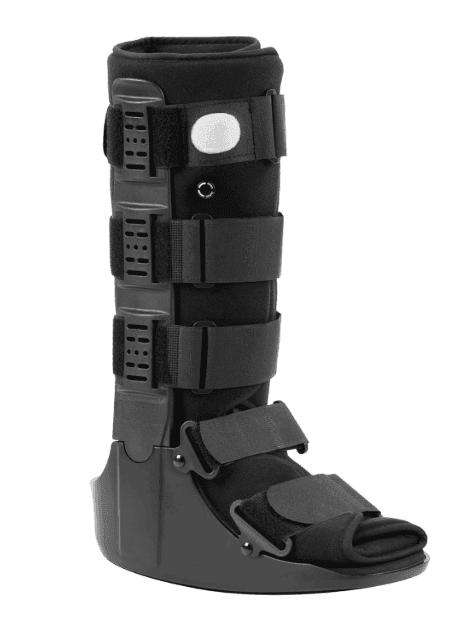
Full Length Air Walker Boot
Full-length walking boot designed to support the foot, ankle, and lower leg during injury recovery and protected walking.
PKR 11,500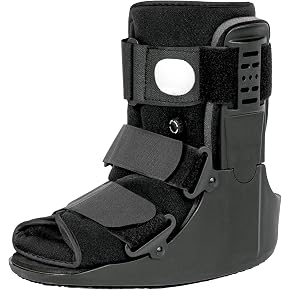
Short Air Walker Boot
Short walker boot designed for ankle and foot support, offering stability, comfort, and protected movement during recovery.
PKR 9,500Still torn between heights?
Send your injury area and your clinician's advice (if any) on WhatsApp — we will tell you plainly which boot matches.
Ask on WhatsAppFrequently Asked Questions
Is a tall boot always better?
No — it provides more coverage, not universally better support. If the injury is at foot/ankle level only, the short boot's lighter build often serves recovery (and daily compliance) better.
Can I switch from tall to short during recovery?
Some recovery plans step down this way, but the timing is a clinical decision — ask your doctor or physiotherapist before changing support levels.
Do both boots have air support?
Yes — both our stocked boots include an inflatable air bladder and rocker sole.
Bought from us? Share your product feedback on WhatsApp — verified customer and clinic reviews are published on our Reviews page.
Please note: Product information on this page is general educational guidance to help you shop. It does not replace advice from a doctor, physiotherapist, or qualified healthcare professional. Follow your doctor or physiotherapist's recommendation on boot type for fracture and post-surgery care.