
How to Apply Kinesiology Tape on the Knee
The general principles that make knee taping stay on and feel right — and the skin warnings that matter more than technique.
Quick Answer
How is kinesiology tape applied to the knee?
In general terms: the skin is cleaned and dried, the tape corners are rounded, the middle is applied with light stretch around the knee cap area, and the ends are laid down with no stretch, then rubbed to activate the adhesive. For injury-specific taping, follow professional guidance.
Scope note: this is general application guidance for sports and comfort taping. Injury-specific taping — where strip direction and tension are part of treatment — should be applied or taught by a physiotherapist.
Prepare the skin (this is 80% of success)
- Clean and fully dry the knee — no oil, lotion, or sweat
- Trim very dense hair if needed (do not tape freshly shaved skin)
- Round the corners of cut strips — square corners peel first (pre-cut strips come rounded)
General application principles
- Sit with the knee bent so the skin is stretched — tape applied to a straight knee wrinkles and pulls when you bend
- Lay the first 3–4 cm of each strip down with zero stretch — anchors hold everything
- Apply the middle of the strip with light-to-moderate stretch around the knee cap area, not compressing directly over it
- Finish the last 3–4 cm with zero stretch again
- Rub each strip firmly for several seconds — the adhesive is heat-activated
- Apply 30–60 minutes before sport so the adhesive settles
Removing the tape
Remove slowly in the direction of hair growth, pressing the skin down behind the tape as you peel — never rip. Warm water or oil softens the adhesive if removal is uncomfortable.
Stop immediately if…
Itching, rash, burning, blistering, or any skin discomfort develops — remove the tape and let the skin recover. Do not tape over broken, irritated, or infected skin, and avoid kinesiology tape entirely if you have adhesive allergy. If knee pain is why you are taping and it persists or worsens, see a professional rather than taping over the problem.
Our tapes: Kinesiology Tape Roll (cut your own lengths) and Pre-Cut Kinesiology Tape (ready strips with rounded corners).
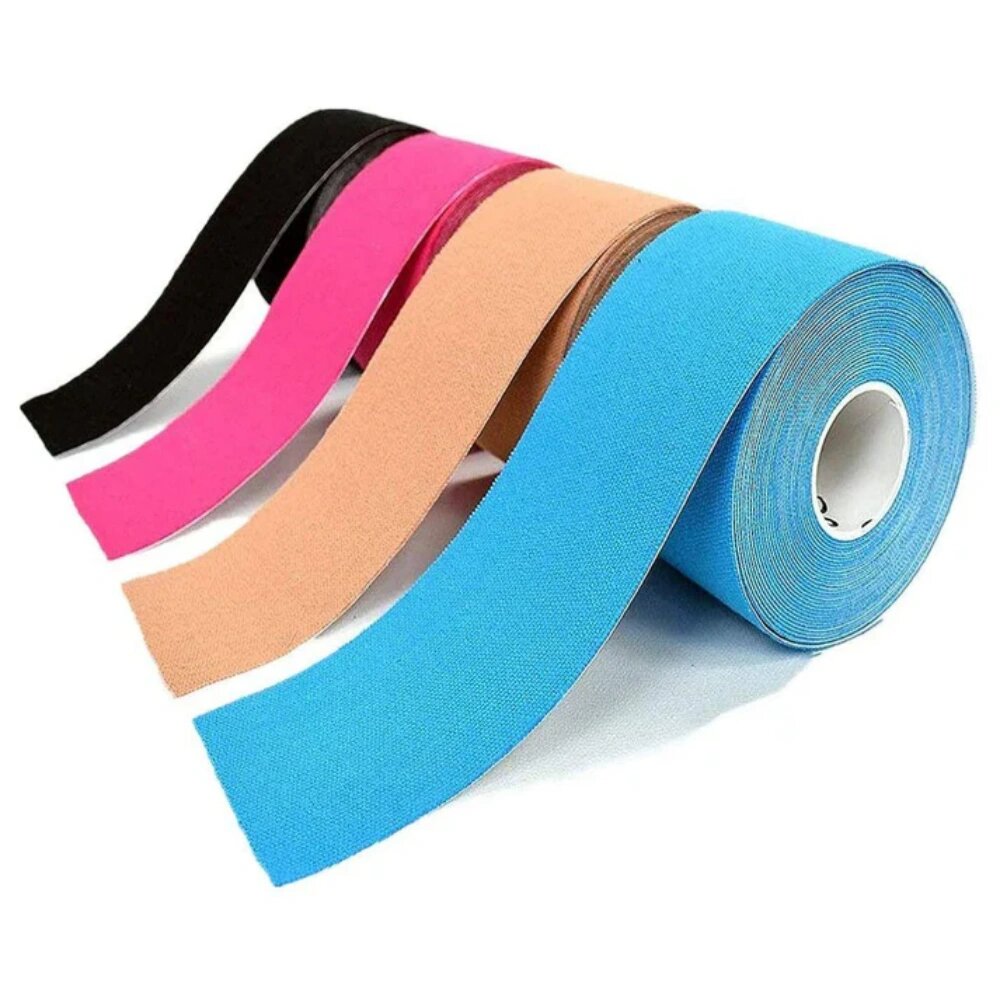
Kinesiology Tape Roll
Elastic therapeutic tape for sports, rehab, and muscle support.
PKR 650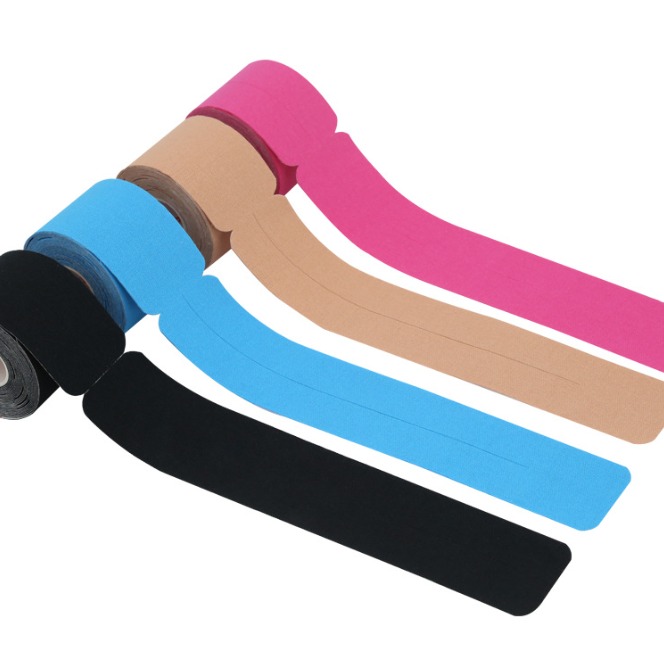
Pre-Cut Kinesiology Tape
Ready-to-apply elastic kinesiology strips for sports, muscle, and joint support.
PKR 900Not sure which tape or format for your knee?
Tell us the activity and how often you tape — we will recommend roll or pre-cut, and how many to order.
Ask on WhatsAppFrequently Asked Questions
How long does knee taping stay on?
Applied to clean, dry skin with stretch-free ends and properly rubbed, kinesiology tape typically stays on for several days of normal activity, including showers.
Should the tape be stretched over the knee cap?
General comfort taping applies light-to-moderate stretch around the knee cap area with zero stretch at the ends. Injury-specific tension patterns are physiotherapy territory — get them applied or taught professionally.
The tape irritates my skin — what now?
Remove it and stop taping until the skin fully recovers. Recurrent irritation suggests adhesive sensitivity — do not push through it.
Bought from us? Share your product feedback on WhatsApp — verified customer and clinic reviews are published on our Reviews page.
Please note: Product information on this page is general educational guidance to help you shop. It does not replace advice from a doctor, physiotherapist, or qualified healthcare professional. This is general application guidance, not treatment. For injury-specific taping, follow professional guidance, and stop use if irritation develops.